Evertrace vs Crunchbase: Real-Time Founder Detection vs Post-Announcement Database
Detailed comparison of Evertrace vs Crunchbase for VC deal sourcing. Compare signal timing, data sources, coverage, integrations, pricing and who each platform is best for.















+250 top VC funds use Evertrace to uncover stealth builders daily















Why leading VCs choose Evertrace over Crunchbase
TLDR;
Evertrace and Crunchbase both serve VC investors, but they sit at opposite ends of the sourcing funnel.
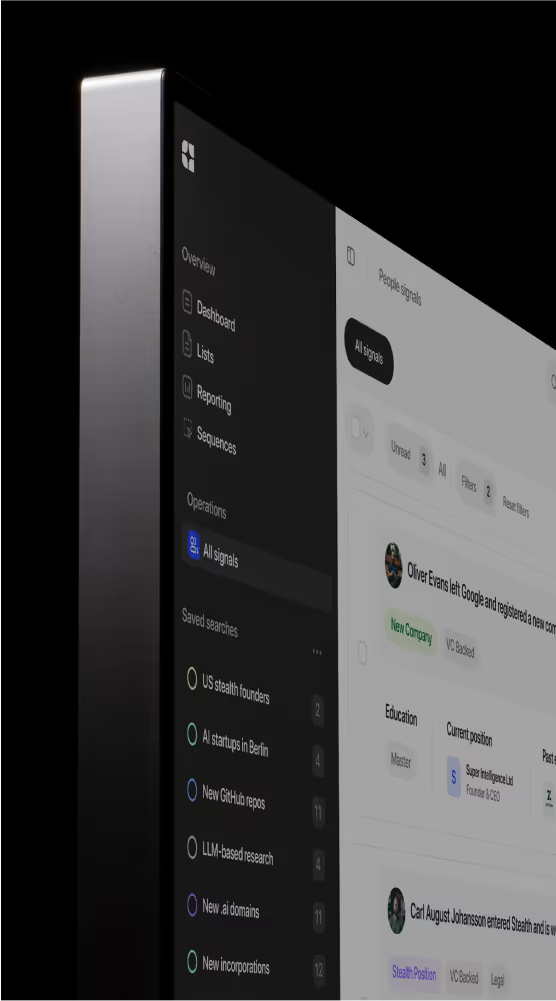
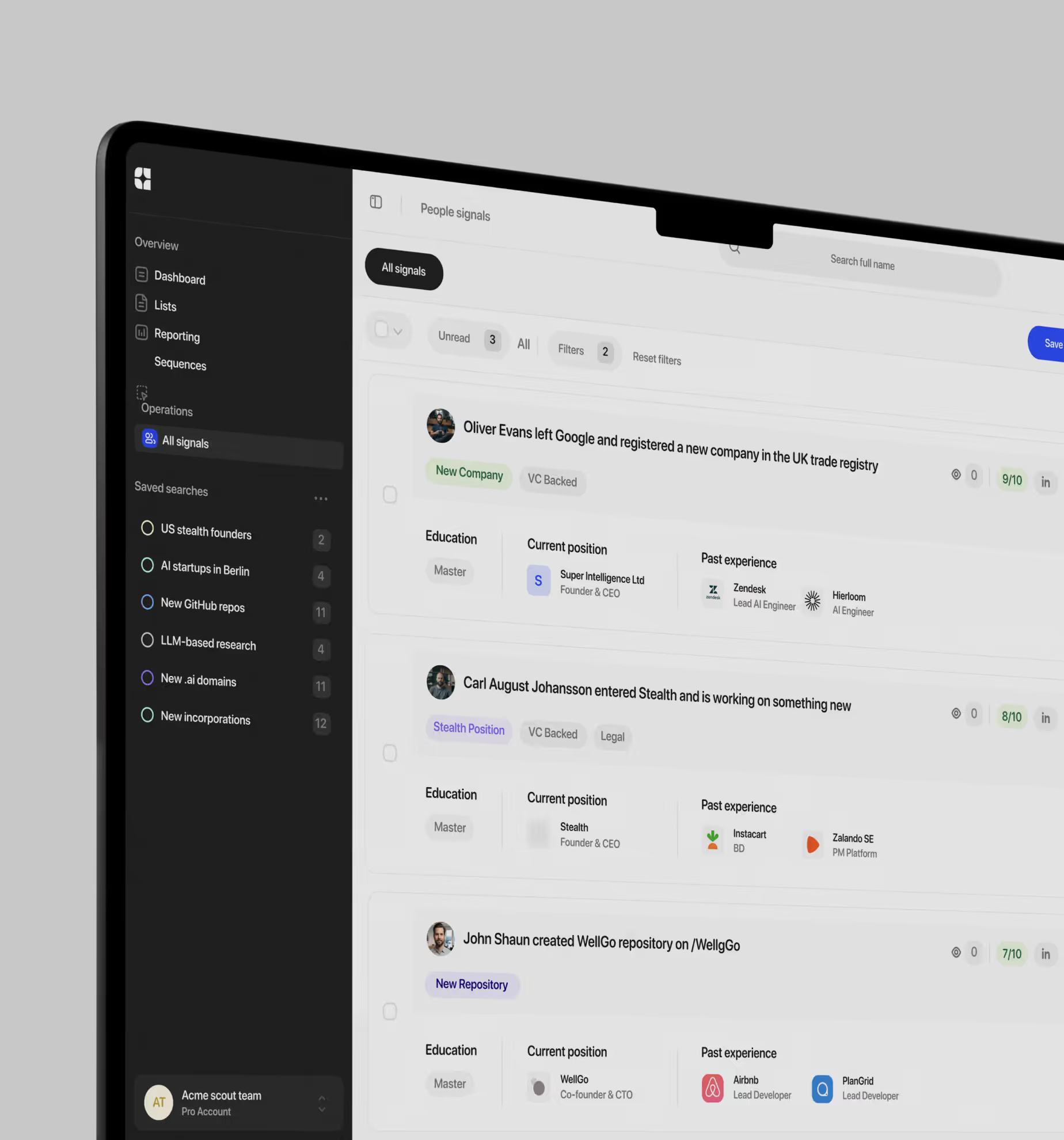
Evertrace detects founders before they've announced anything - using real-time signals from company registries, GitHub, patents, domains and more.
Crunchbase is a post-announcement company database. It catalogs companies after they've raised, hired, launched, or made the news, and is the de facto reference for funding history, executive moves, and competitive research. By the time a startup has a Crunchbase profile, every other investor can see it too. If your edge is being first, Evertrace is a great match.
If you need a canonical reference for funding rounds, due diligence, and market maps, Crunchbase is an established choice.


Why Sourcing Earlier Beats Searching Smarter
Here is a detailed look at how Evertrace and Crunchbase compare across the dimensions that matter most for early-stage deal sourcing.
Crunchbase is one of the most widely used company database in venture capital. Almost every fund has access to it, almost every analyst has used it, and that ubiquity is exactly the problem for early-stage investors. By the time a startup is in Crunchbase, it has typically passed at least one of these thresholds: it raised a round and the announcement was published, a contributor added it, a founder claimed the profile, or it appeared in news that Crunchbase ingested. None of those events happen at the moment a company is being formed. They happen weeks, months, or quarters later.
Evertrace is built on the inverse premise. The earliest verifiable trace of a new company is rarely a press release - it's a trade registry filing, a domain registration, a first commit to a private repo, a patent application, a research grant, or a co-founder search. Those signals exist before any database picks them up, including Crunchbase. Evertrace was built to monitor that earlier layer continuously and surface the founders behind the signals.
Database vs Detection Engine
Crunchbase is a database. You go to it with a query - "Series A SaaS companies in Berlin in the last 90 days" - and it returns rows. That works well for research, market mapping, and due diligence on companies you already know exist. It works less well for sourcing the next round, because the data has already been ingested by every other fund. Evertrace is a detection engine. It doesn't wait for you to query - it pushes thesis-matched founder signals into Slack, Affinity, or Attio the moment they appear in a primary source. The mental model is different: Crunchbase answers "what already exists?" while Evertrace answers "what's about to exist?"
Data Freshness: The Sourcing Window
For pre-seed and seed investors, the freshness gap is the difference between sourcing and reading the news. Crunchbase data freshness depends on contributor edits, founder claims, and ingestion of public announcements. A funding round added today was likely closed and announced earlier in the week. A new company added today probably already has a website, press, or social media presence. By the time you see it on Crunchbase, the founder has fielded multiple introduction requests.
Evertrace's signals are designed to arrive as close to the moment of creation as possible. Company registry filings are picked up as they're published. GitHub activity is monitored continuously. Patent filings surface as they're recorded. Domain registrations are captured in near real-time. The system minimises the gap between "something happened" and "you know about it." The platform also filters out shell companies and holding structures to surface real founders.
When your thesis depends on being first to reach a founder, the gap between primary registry data and aggregated post-announcement reporting is the difference between winning a deal and joining a queue.
Evertrace monitors a diverse set of unconventional, primary sources. The kind of places where founders leave their earliest traces:
Company registries: Real-time monitoring of new incorporations across 17+ countries. Filters out shell companies and holding structures to surface real founders.
GitHub: Detects engineers transitioning from side projects to startup formation by monitoring stealth activity and early building patterns.
Patent filings: Catches deep tech spinouts and inventive founders by surfacing new IP before any market visibility exists.
Academic research: Tracks researchers whose work has commercial potential and flags when they shift from academia into venture creation.
Domain registrations: Captures new domains as they're registered and links them to individuals and their prior activity.
Research grants: Picks up research grant recipients that signal company formation, before any public announcement.
Crunchbase aggregates more familiar, secondary sources:
Self-reported company profiles, claimed and edited by founders, employees and contributors.
Funding announcements ingested from news outlets, press releases, and investor disclosures.
Acquisitions and exits published in deal reports and SEC filings.
Executive moves picked up from press, LinkedIn and contributor edits.
Crunchbase Predictions: a model that ranks known companies by likelihood of funding, acquisition, or IPO.
The pattern is clear.
Evertrace uses behavioral and transactional signals (what people do).
Crunchbase uses descriptive and reported data (what companies are, after they've shown up).
Both are valuable, but they serve investors at fundamentally different stages of the funnel.
Workflow and Integrations
Evertrace is built to push thesis-matched founder signals directly into early-stage sourcing workflows:
Slack - real-time alerts when new founders match your thesis
Affinity - signals sync directly into your deal flow CRM
Attio - same direct sync for Attio-based workflows
AI Agents - connect via Evertrace MCP
Bulk data delivery - receive data on your preferred schedule
REST API - feed founder signals into custom dashboards or proprietary systems
Crunchbase offers an integration stack that scales with the plan tier:
CRM sync with Salesforce, HubSpot and Affinity (Business tier and above)
REST API access (Enterprise tier only)
CSV exports for offline analysis (with row caps that depend on plan)
Auto-enrichment add-ons for CRM contact and account data
The difference reflects the product. Evertrace pushes a small number of high-signal alerts to the people who need to act on them. Crunchbase exposes a large data layer that teams pull, enrich, and distribute through their own tooling. One is built for time-to-outreach. The other for breadth of access.
Who Should Use What:
Choose Evertrace if:
- You invest at pre-seed or seed and your edge depends on reaching founders before competitors
- You want a sourcing engine that pushes signals to you, not a database you query
- You value data freshness: real-time signals from primary sources, not ingested press releases
- You want to source from places other tools don't monitor: patents, trade registries, GitHub, domains, co-founder searches, academic research, and app stores
- You use Affinity or Attio and want signals to flow directly into your CRM
- You use AI tools like Claude or ChatGPT - so you can connect Evertrace MCP
- You want AI-scored founder detection
Choose Crunchbase if:
- You need a canonical reference for funding rounds, executive moves, and acquisitions
- Due diligence research and market mapping are central to your workflow
- You need company profiles and contact data to enrich your CRM
- Your team uses Crunchbase Predictions to identify likely Series A or exit candidates among known companies
Use both if: Some funds do. Evertrace catches founders at the moment of formation, and Crunchbase confirms history, funding context and competitive set once a conversation is underway. They cover different ends of the same funnel.
Any questions?
Find answers below
They serve different jobs. Crunchbase is a post-announcement company database - most useful for research, due diligence, and confirming history on companies that already have a public footprint. Evertrace is a founder detection engine, built to surface people who are forming companies before any database, including Crunchbase, has indexed them. If your priority is sourcing earlier than your competitors, Evertrace replaces Crunchbase as a sourcing tool while Crunchbase remains useful for everything downstream.
Different points in the timeline. Evertrace finds founders from primary, verifiable events: a company registration in a trade registry, a patent filing, a new GitHub repo, a domain registration. Those events exist before a company is publicly known. Crunchbase finds companies after a public event has occurred: a funding round announced, a profile claimed, news ingested, a contributor edit. One captures the start of the company. The other catalogues it after the fact.
Evertrace's signals come directly from primary sources (trade registries, patent offices, GitHub, domain registries) and arrive in near real-time. Crunchbase data is as fresh as the source it's reading from -. funding round entries lag the announcement by hours to days, contributor and AI-ingested edits can take longer, and self-claimed profiles update only when a founder or employee chooses to. For pre-announcement signals, Crunchbase is structurally late.
Some funds use both. Evertrace is used by 200+ funds globally including Creandum, Atomico, Cherry Ventures, and Antler - leading early-stage investors who prioritise being first to a founder. Crunchbase is used almost universally for downstream research and CRM enrichment. The two coexist in some modern sourcing stacks.
Dealroom and PitchBook are also database-style platforms - broader market intelligence and deeper financial detail respectively, but the same fundamental architecture as Crunchbase. They surface companies after the early sourcing window has closed. Evertrace is purpose-built for the stage before that, and complements all three.
For sourcing, yes - Evertrace surfaces founders earlier than any post-announcement database can. For everything else (funding round history, exit research, comp analysis, CRM enrichment), Crunchbase still does that job well. Most teams keep Crunchbase for research and add Evertrace for early-stage sourcing.
Customer testimonial
"We use Evertrace to enhance our people data. It’s a great add-on to help identify early-stage opportunities early."


See how Evertrace accelerates your dealflow
Let us show you what early-stage detection looks like in practice.