

Angel Investing: How to Find Founders Before the Seed Round
The angels who are consistently getting into the best rounds at pre-seed stage are not the ones with the longest networks. They are the ones who have built systematic ways of finding founders before anyone else knows they exist. This guide covers how angel investing works at the earliest stage, where the best opportunities come from, and how individual investors can build a sourcing edge without the infrastructure of a formal fund.
Where Angel Opportunities Come From
Angel deal flow comes from several distinct sources, each with different timing characteristics. Network referrals arrive when a founder is already putting together a round and asking for introductions. Competition for allocation is real by that point. Accelerator cohorts surface founders slightly earlier but still within a structured process. Direct detection through signal monitoring is the approach that reaches founders earliest: an angel who monitors company incorporations, watches for relevant domain registrations, tracks co-founder searches, and follows GitHub activity from engineers with relevant backgrounds is finding founders at a stage that no referral or program can reach.
Building a Systematic Approach as an Individual Angel
Individual angels face a constraint that institutional funds do not: limited time. A manual process that requires hours of searching each week is unsustainable. A system that delivers a filtered, scored feed of relevant signals requires only a small amount of review time each week. The practical elements of a systematic approach are: define the focus clearly, set up monitoring for the right signal types, and build a simple relationship management system.
What Angels Offer That Institutional Funds Do Not
The most effective angels at the pre-seed stage offer something that most institutional funds genuinely cannot: speed, simplicity, and specific operational expertise. A pre-seed founder taking angel capital is dealing with one person who can decide quickly and be useful immediately. The angels who get the best allocation are those who have made themselves genuinely useful before asking for anything.
How Evertrace Supports Angel Investors
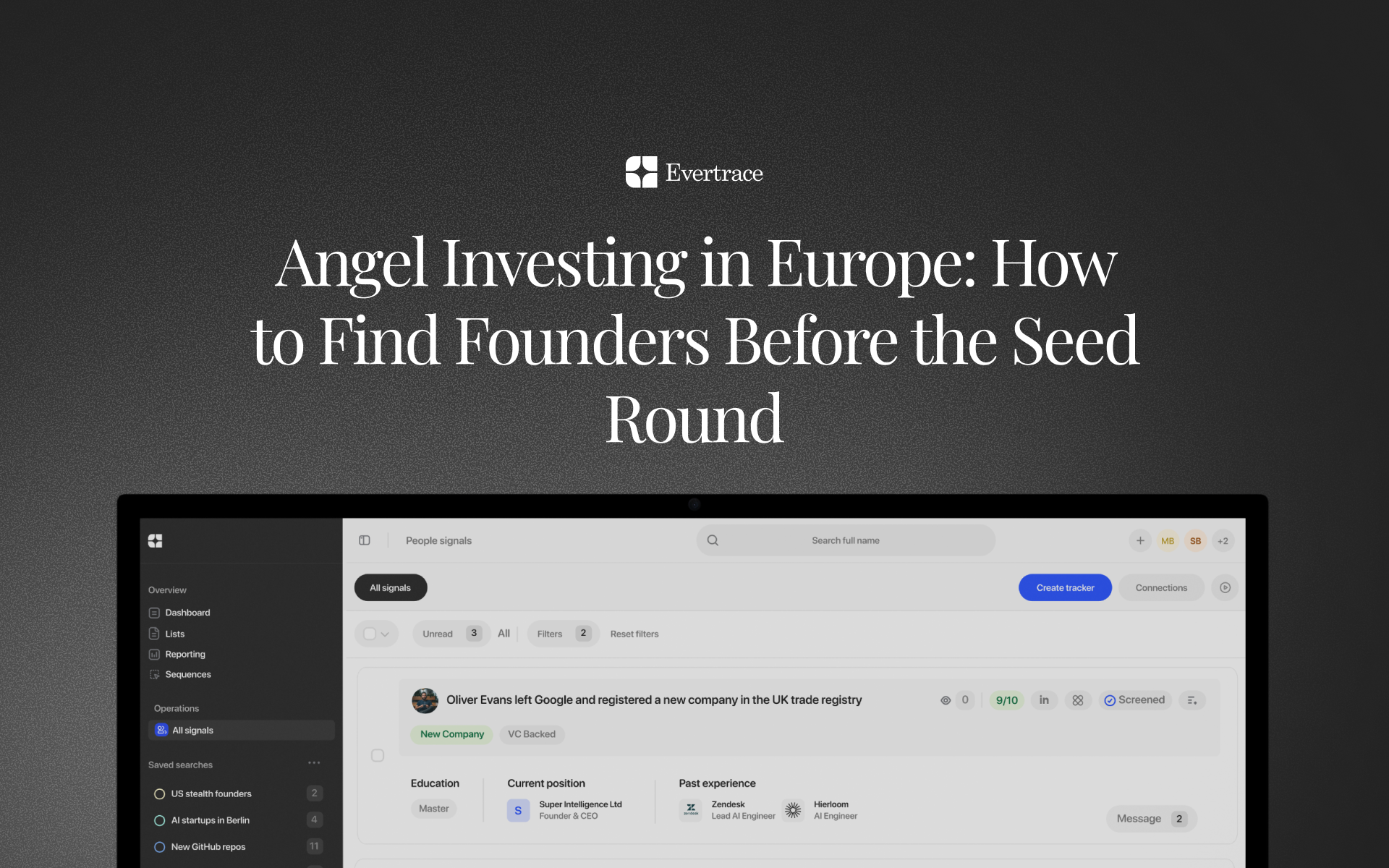
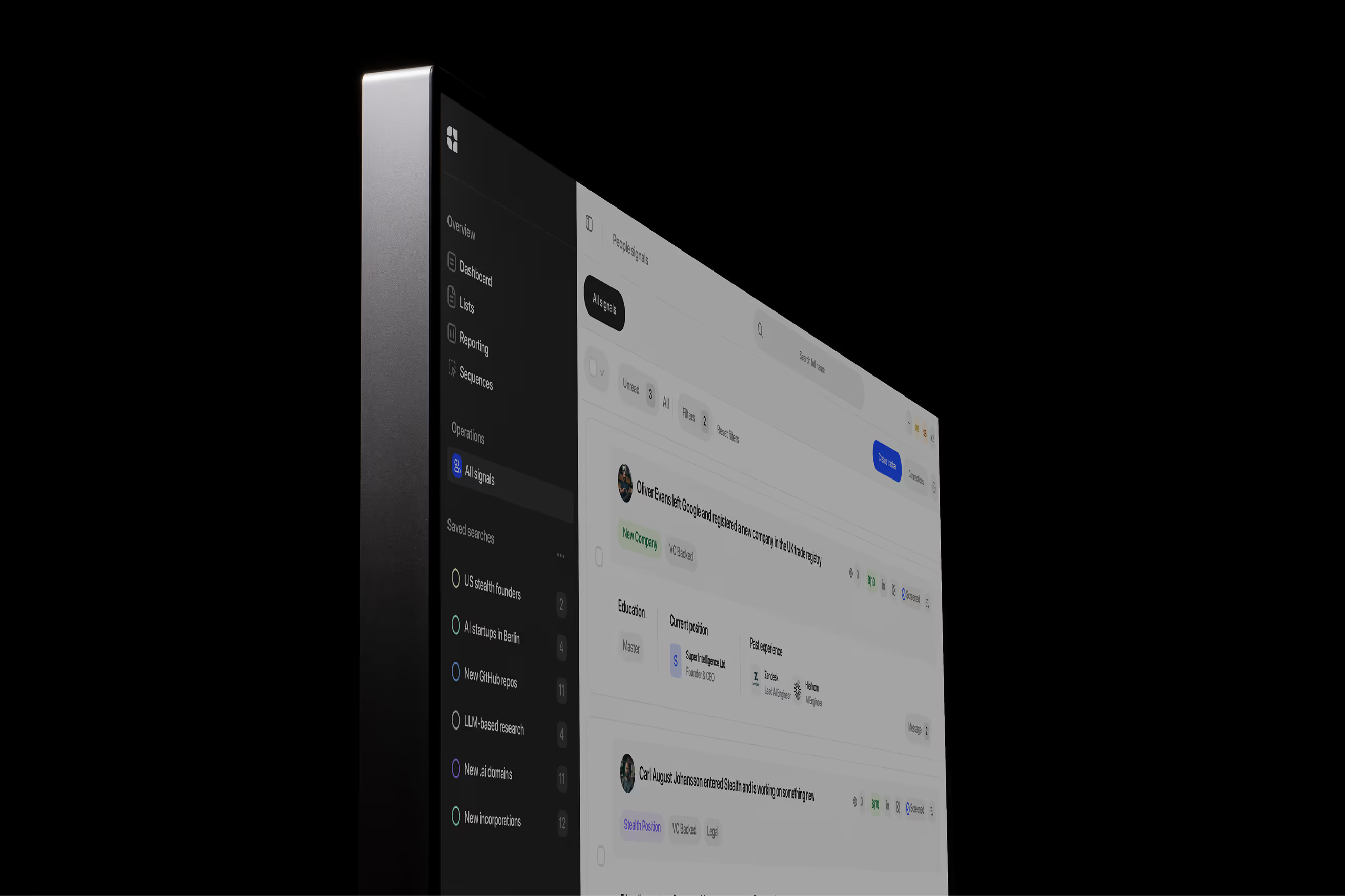
Evertrace enables individual angels and smaller funds to access the same early-stage signal detection infrastructure that the best-resourced institutional investors use. Real-time monitoring of trade registries, GitHub, patent filings, domain registrations, academic research, and other signal sources globally produces a filtered, scored feed of founders at the formation stage. Signals can be filtered by geography, sector, and founder profile to match any investment focus. New signals flow into Affinity, Attio, or connected AI agents via MCP.
175+ VC firms and angel investors globally use Evertrace to find founders before their competitors do.
Book a demo to see Evertrace in action
Frequently Asked Questions
How do angel investors find pre-seed opportunities systematically?
The most effective approach combines systematic signal monitoring with a focused investment thesis. Monitoring company incorporations, GitHub activity, and domain registrations in a specific geography and sector surfaces founders at a stage that network referrals and accelerator introductions cannot reach.
What is a typical angel investment ticket size at pre-seed?
Angel tickets at pre-seed typically range from 25,000 to 200,000 euros or dollars, depending on the angel's resources, the round structure, and the sector. Many pre-seed rounds are assembled from a combination of angels and small institutional funds.
How much time does systematic angel sourcing require each week?
With the right infrastructure in place, reviewing a filtered signal feed and following up on relevant leads requires two to four hours per week. The setup time is higher, but ongoing monitoring can be highly efficient once filter criteria are configured.
The founder detection engine for VCs
AI-powered founder detection with unmatched coverage.
 Book a demo