


GitHub as a VC Sourcing Tool: What Engineers Do Before They Start a Company
Most venture capital sourcing ignores GitHub entirely. That is a mistake, and it is one of the clearest examples of how the best early-stage investors are building advantages that others cannot see.
GitHub is the largest repository of software development activity in the world. It is also, for a specific and valuable subset of startup founders, the place where a company begins to take shape before any formal announcement, legal structure, or public presence exists. Engineers who are transitioning from employment to independent company building leave detectable traces in their code activity. Investors who know how to read those traces can find technical founders weeks or months before anyone else.
Why Engineers Start on GitHub Before Anywhere Else
For a technical founder, building comes before everything. Before choosing a legal structure, before registering a domain, before telling anyone what they are working on, a technical founder starts writing code. GitHub is where that code lives. The behavioral shift is detectable: employment code activity has a signature of commits during working hours and contributions to established repositories, while independent startup activity shows new repositories, different hours, and a shift from contributing to existing projects to building something new.
The GitHub Signals That Indicate Startup Formation
New repository creation with product structure
A repository structured like a product rather than a tool or library suggests commercial intent. Early-stage startup repositories often include deployment infrastructure configuration, authentication scaffolding, database schemas, and other architectural elements that would be unnecessary for a personal project.
Shift in commit timing and frequency
When an engineer's commit pattern shifts significantly, with activity increasing at evenings and weekends while daytime commits to employer repositories decline, it can indicate a transition toward independent work. A pattern of increasing independent activity sustained over several weeks is a meaningful signal.
Shift from contributing to building
A developer whose historical GitHub activity is primarily contributions to established open source projects, who begins creating and committing to new repositories they own, is exhibiting a shift from contributor to builder. This transition is a meaningful signal for technical founders.
Organisation and team formation
When a developer creates a new GitHub organisation, adds collaborators, and begins coordinating multi-contributor development on new repositories, it is a strong signal of early company formation. A GitHub organisation is typically created to manage code that belongs to a company rather than an individual, and its creation often precedes formal company registration by days or weeks.
What GitHub Signals Cannot Tell You
GitHub activity is a meaningful sourcing signal for technically driven ventures, but it misses non-technical founders entirely and cannot reliably distinguish between a serious venture and an ambitious side project at early stages. GitHub signals require corroboration from other signal types to reach useful confidence levels.
Using GitHub Signals in Combination
The highest-value use of GitHub signals is in combination with other founding indicators. A developer who creates a new GitHub organisation, registers a matching domain, and incorporates a company within the same two-week period is exhibiting a combination of signals that is highly predictive of a new venture.
How Evertrace Uses GitHub Signals
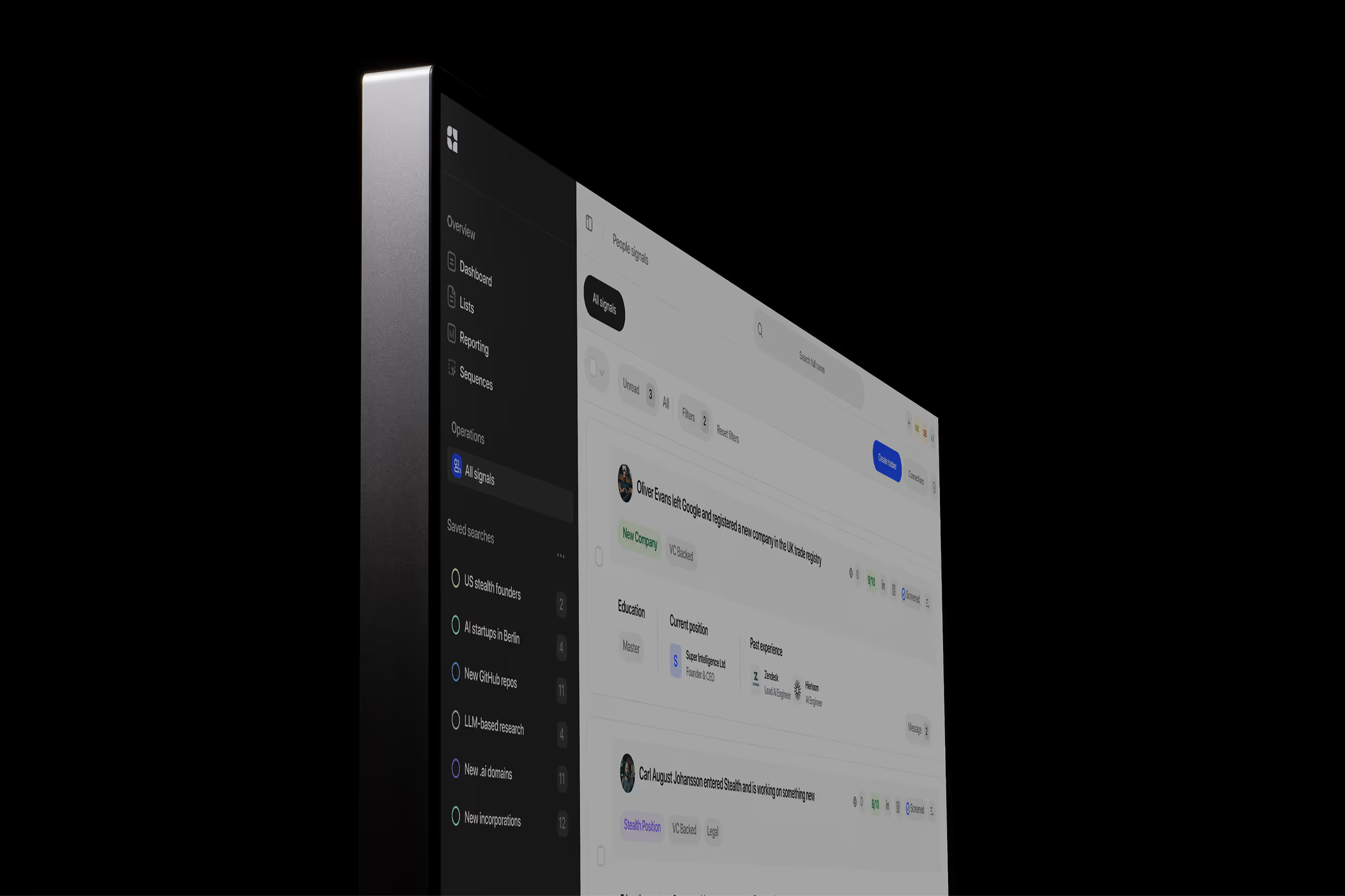
Evertrace monitors GitHub activity as part of a multi-signal founder detection system. GitHub signals are combined with trade registry filings, domain registrations, patent activity, academic research, and other signal types to build high-confidence detections of founders in the early stages of company formation. Signals are scored and filtered by geography, sector, and founder profile, and flow directly into Affinity, Attio, or connected AI agents via MCP.
175+ VC firms globally use Evertrace to find founders before their competitors do.
Book a demo to see Evertrace in action
Frequently Asked Questions
Can VCs really use GitHub to find founders before they announce?
Yes. Engineers who are building startups leave detectable patterns in their GitHub activity before making any public announcement. New repository creation, shifts in commit timing, and the transition from contributing to building are all observable signals.
What GitHub activity most strongly signals a startup?
The creation of a new GitHub organisation, combined with product-structured repositories and multi-contributor activity, is one of the strongest GitHub signals.
Does GitHub sourcing only work for technical founders?
Yes. GitHub signals are only relevant for founders who write code. Non-technical founders and non-technical founding activity require other signal types.
How do investors contact founders they find through GitHub?
Investors typically reach out with a brief, honest message acknowledging how they found the person. The outreach should be conversational rather than transactional, focused on starting a relationship rather than requesting a pitch.
How early does GitHub activity appear relative to formal company formation?
GitHub activity often precedes formal company registration by days to weeks. In some cases, especially for founders who build for an extended period before incorporating, the lead time can be months.
The founder detection engine for VCs
AI-powered founder detection with unmatched coverage.
 Book a demo