
By the time an AI researcher announces a company, the work behind it may already have a history. A technical problem explored in papers. A group of collaborators who kept working together. An open-source project that started attracting users.
The announcement puts a name and a company around those pieces. For an early-stage investor, the opportunity to understand the people and their work can begin much earlier.
Following researchers well takes more than watching departures from well-known labs. It means understanding what someone has been working on and why that work might lead them towards building a business.
The problem they understand is the interesting part
A researcher’s previous employer tells an investor something about their environment. Their work tells a more specific story: which problems they have spent years thinking about, what they know how to build and where they believe existing approaches fall short.
That is where a sourcing thesis becomes useful. An investor interested in industrial robotics may follow work on manipulation and deployment in unfamiliar environments. A fund focused on AI infrastructure may care more about serving models, evaluation or the cost of running systems in production.
The relevant people can come from research labs, universities, established companies and open-source communities. Following the technical problem gives the investor a broader view than following a handful of employer names.
A departure changes the context around existing work
Someone leaving a lab is a reason to revisit what they are doing. A project that previously looked like part of an employer’s research may become independent. Collaborators may begin working under a new name. A personal website may start describing a product.
Each development adds context. A departure on its own leaves the next step open; a company page naming the team provides a much clearer picture.
The value for an investor is in following that progression. There is time to learn about the problem, understand the team’s direction and form a view before the first meeting has to be a fundraising discussion.
The team may become visible through the work
Research papers and public repositories can reveal recurring collaborators. That matters because a company is more than an individual with a strong CV. How people work together, and what they have already built together, can be part of the early story.
Consider a robotics project whose authors keep publishing, release software and begin discussing practical deployments. An investor with experience selling into manufacturing has something relevant to explore: how the research behaves outside the lab and which users feel the problem most sharply.
The investor does not need a finished market map to begin learning. Familiarity with the work can make the eventual conversation more thoughtful and help the fund recognise a commercial direction as it develops.
Early contact should feel like a conversation about the work
An investor who reaches out before a company launch has an opportunity to approach the person on different terms. There may be no deck, no round and no settled business plan.
A specific observation about the research is a stronger opening than a generic request to hear about fundraising. So is a relevant customer introduction, a question about deployment or an offer to share what the fund is hearing from companies in the field.
That kind of contact gives the researcher a reason to respond even while their plans are taking shape. It also gives the investor a better chance to understand how the person thinks about turning technical work into something people will use.
Our founder outreach guide explores how those openings change with the signal that prompted them.
Making research part of everyday sourcing
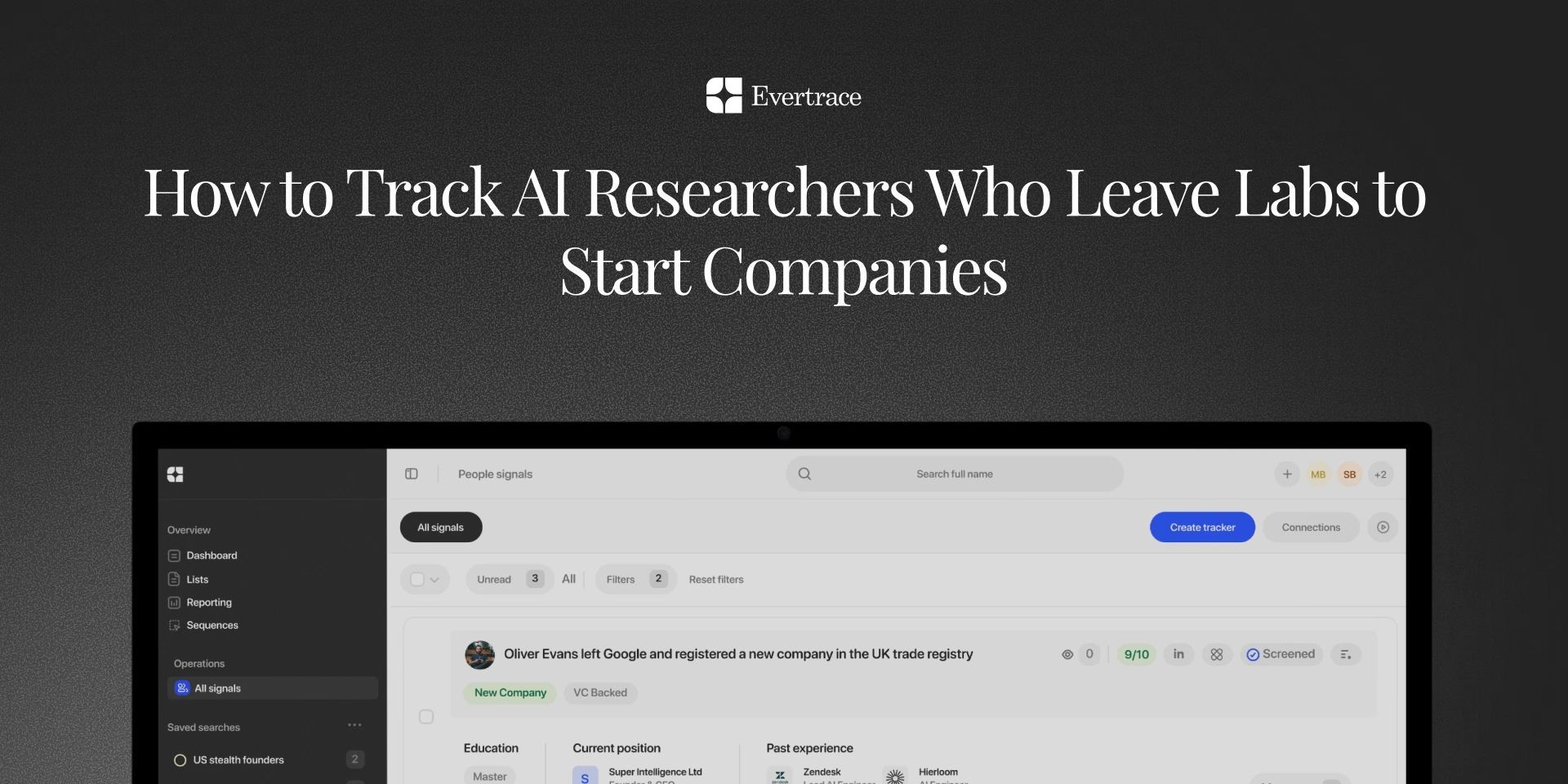
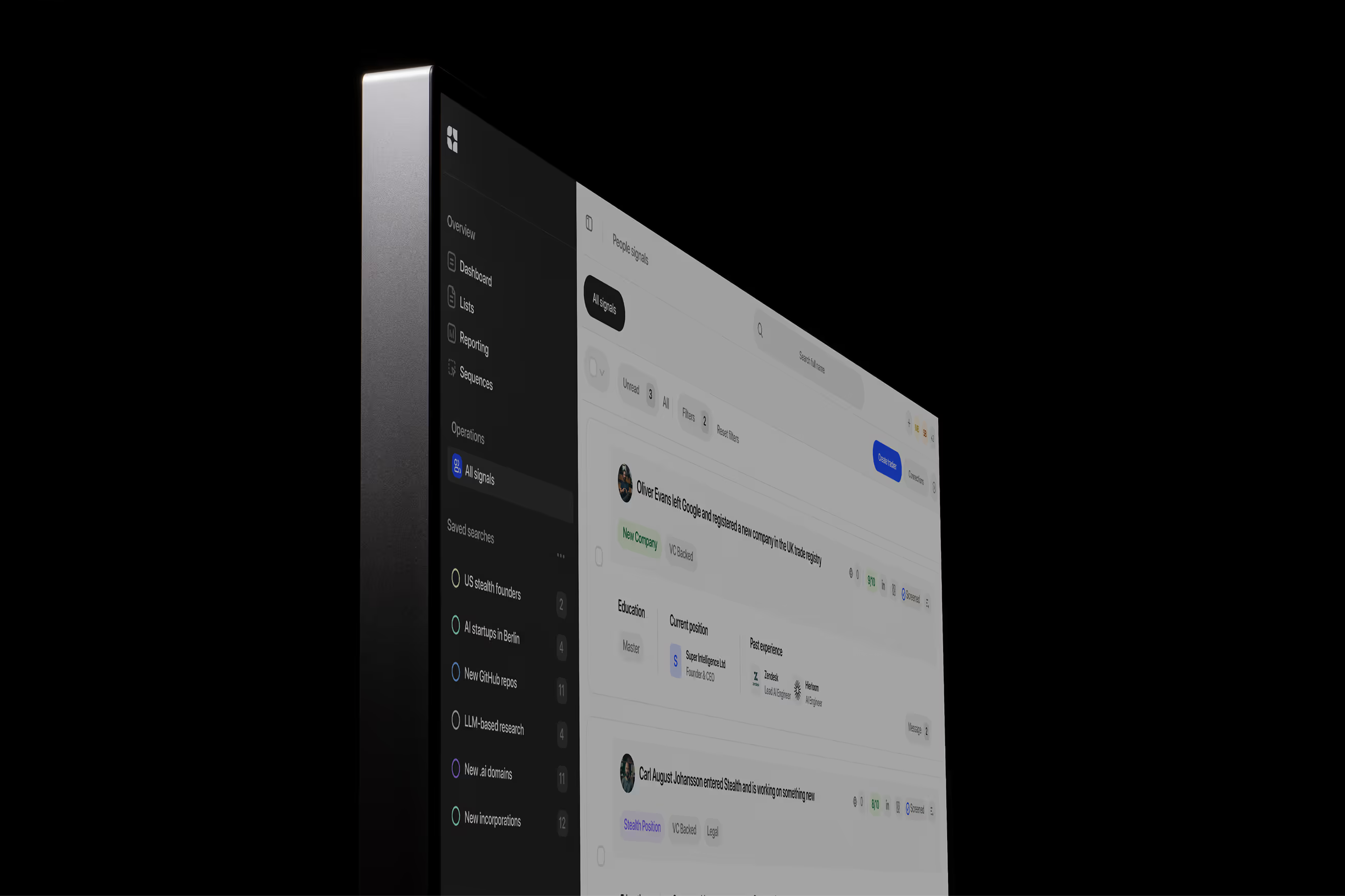
Evertrace brings research, GitHub activity and other founder signals into the sourcing process. These sources help investors look beyond companies that already have a launch page and a fundraising story.
The lasting value comes from familiarity. Following a field over time helps a fund recognise people, understand their work and have something useful to contribute when they begin building a company.
The founder detection engine for VCs
AI-powered founder detection with unmatched coverage.
 Book a demo