

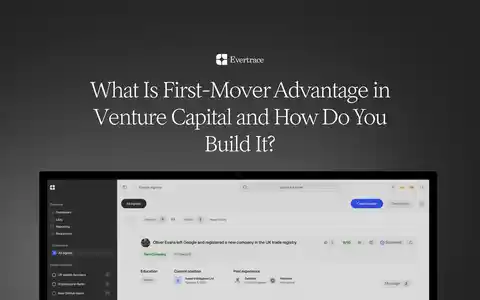
What Is First-Mover Advantage in Venture Capital and How Do You Build It?
First-mover advantage in venture capital is the benefit an investor gains by being the first institutional investor to have a substantive relationship with a founder. It is not simply about being first to see a company. It is about being first to build a real relationship, at a stage when no other investor knows the company exists, such that when the founder is ready to raise, the first-mover investor is the natural and preferred choice.
What First-Mover Advantage Actually Means in Practice
Genuine first-mover advantage requires arriving before any process exists. It means the investor makes contact in the weeks or months immediately after a founder has committed to building something, often before the company has a name, a product, or any external funding. At that point, the founder has not decided to raise, has not told other investors what they are building, and has no competitive process underway. The investor who arrives at that moment has something that later arrivals cannot easily replicate: time. Time to understand the business deeply before any competitive pressure exists. Time to demonstrate genuine value before asking for anything.
The Three Dimensions of First-Mover Advantage
Information advantage: an investor who has been in conversation with a founder for six months before the fundraising process begins has a much richer understanding of the company, the team, the market, and the risks than an investor who meets the founder for the first time during a process. Relationship advantage: a founder who has received genuine help from an investor over months, who has shared early doubts and pivots with them, is not treating that investor as one of many options when the time comes to raise. Negotiating position: an investor who arrives before a competitive process exists is negotiating in a different environment from one who arrives during one.
How First-Mover Advantage Compounds
Founders who were reached early and well-served refer other founders. A fund known for showing up first, and for being genuinely useful when it does, develops a reputation that attracts founders who value that kind of investor relationship. This creates a self-reinforcing cycle: early arrival generates better relationships, better outcomes generate a stronger reputation, and a stronger reputation attracts more founders who want an early investor.
How to Build First-Mover Advantage Systematically
Finding founders early enough requires systematic signal monitoring. Personal networks, conference relationships, and inbound applications all reach founders at stages that are too late for genuine first-mover positioning. The only channels that consistently reach founders before any competitive process are those that detect founding activity at the signal stage: company registrations, code activity, patent filings, domain registrations, and other observable indicators of early company formation. Maintaining relationships then requires operational discipline through the months between first contact and first investment.
How Evertrace Builds First-Mover Positioning
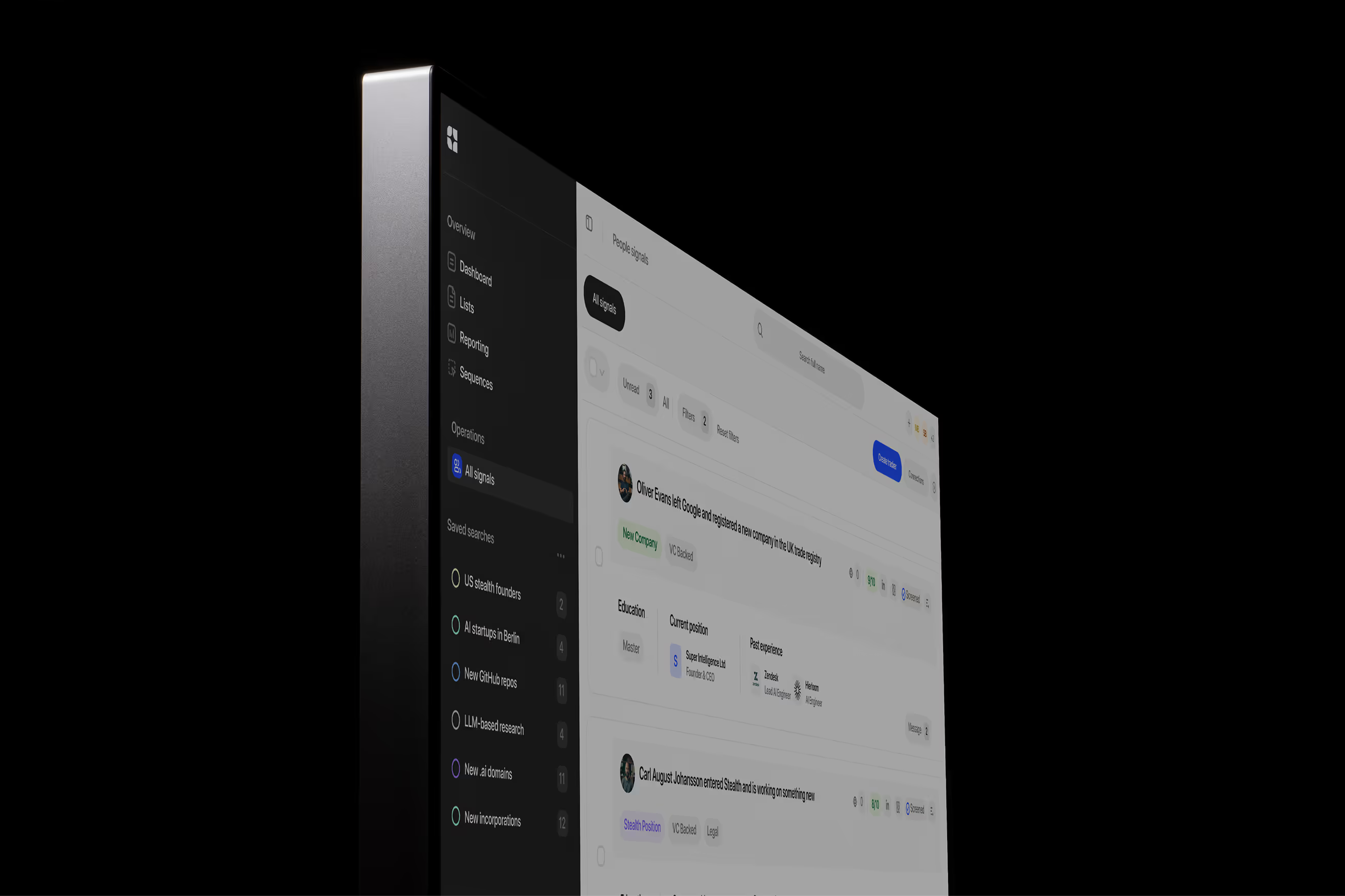
Evertrace provides the signal detection layer that makes first-mover positioning achievable at scale. By monitoring trade registries, GitHub, patent filings, domain registrations, academic research, and other real-time signal sources globally, Evertrace surfaces founders at the earliest possible stage, before they have announced anything publicly.
175+ VC firms globally use Evertrace to build first-mover positioning as a systematic competitive advantage.
Book a demo to see Evertrace in action
Frequently Asked Questions
What is first-mover advantage in venture capital?
First-mover advantage in venture capital is the benefit an investor gains by being the first to build a substantive relationship with a founder, before any other investor knows the company exists. It creates information, relationship, and negotiating advantages that compound over time.
Is being first to a competitive process the same as first-mover advantage?
No. Arriving first at a competitive fundraising process means you are the fastest responder to a publicly visible event. Genuine first-mover advantage requires arriving before any process exists, typically when no other investor is aware of the opportunity.
What makes first-mover advantage compound over time?
Founders who were reached early and well-served refer other founders. A fund known for early arrival builds a reputation that attracts the specific founders who value relationship-first investors, creating a self-reinforcing cycle that becomes stronger over multiple fund cycles.
The founder detection engine for VCs
AI-powered founder detection with unmatched coverage.
 Book a demo