

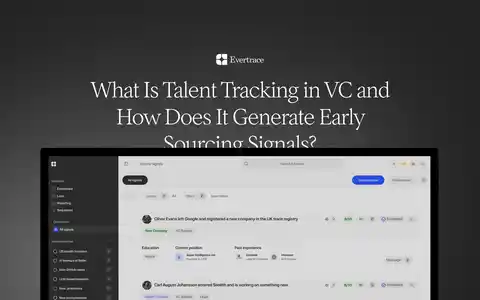
What Is Talent Tracking in VC and How Does It Generate Early Sourcing Signals?
Talent tracking is the practice of monitoring individuals whose backgrounds make them likely to start high-potential companies, with the goal of identifying founding intent before any company formation event occurs. It is one of the earliest-stage sourcing signals available, and one of the least systematically used. The premise is straightforward: exceptional companies are almost always built by exceptional people, and exceptional people with relevant backgrounds tend to move toward company formation in observable ways before any formal signal appears.
Why Talent Tracking Matters
Most founding signals appear after the decision to start a company has been made. Talent tracking attempts to identify potential founders at an even earlier stage, during the period when an individual is considering starting a company but has not yet taken any of the formal steps. The investor who identifies a potential founder at this stage and begins a relationship before any company exists has an advantage that even the fastest trade registry monitoring cannot replicate.
The Signals That Indicate Founding Intent
The option of starting something new is disproportionately common for those with strong technical backgrounds, relevant domain expertise, and personal financial security. Announced departures on personal websites, GitHub, etc. with ambiguous next steps frequently precede company formation within six to eighteen months. Individuals leaving research or academic roles with commercially relevant expertise, co-founder searches, and public expressions of problem-space interest are all meaningful signals.
How Talent Tracking Combines With Other Signals
Talent tracking is most powerful when it combines with other founding signals. An individual who has been flagged as a potential founder based on a public announcement about leaving a role, and who then incorporates a company and registers a domain within the same month, is a very high-confidence signal. The talent signal provides early warning; the formal founding signals confirm that company formation has occurred.
The Limitations of Talent Tracking
Talent tracking has higher false positive rates than formal founding signals. Many people who announce they are leaving senior roles do not start companies. Signal quality depends heavily on the specificity of the filtering criteria, and the signal requires time sensitivity: an announced departure that was a strong signal six months ago is less useful if no follow-up has occurred.
How Evertrace Incorporates Talent Signals
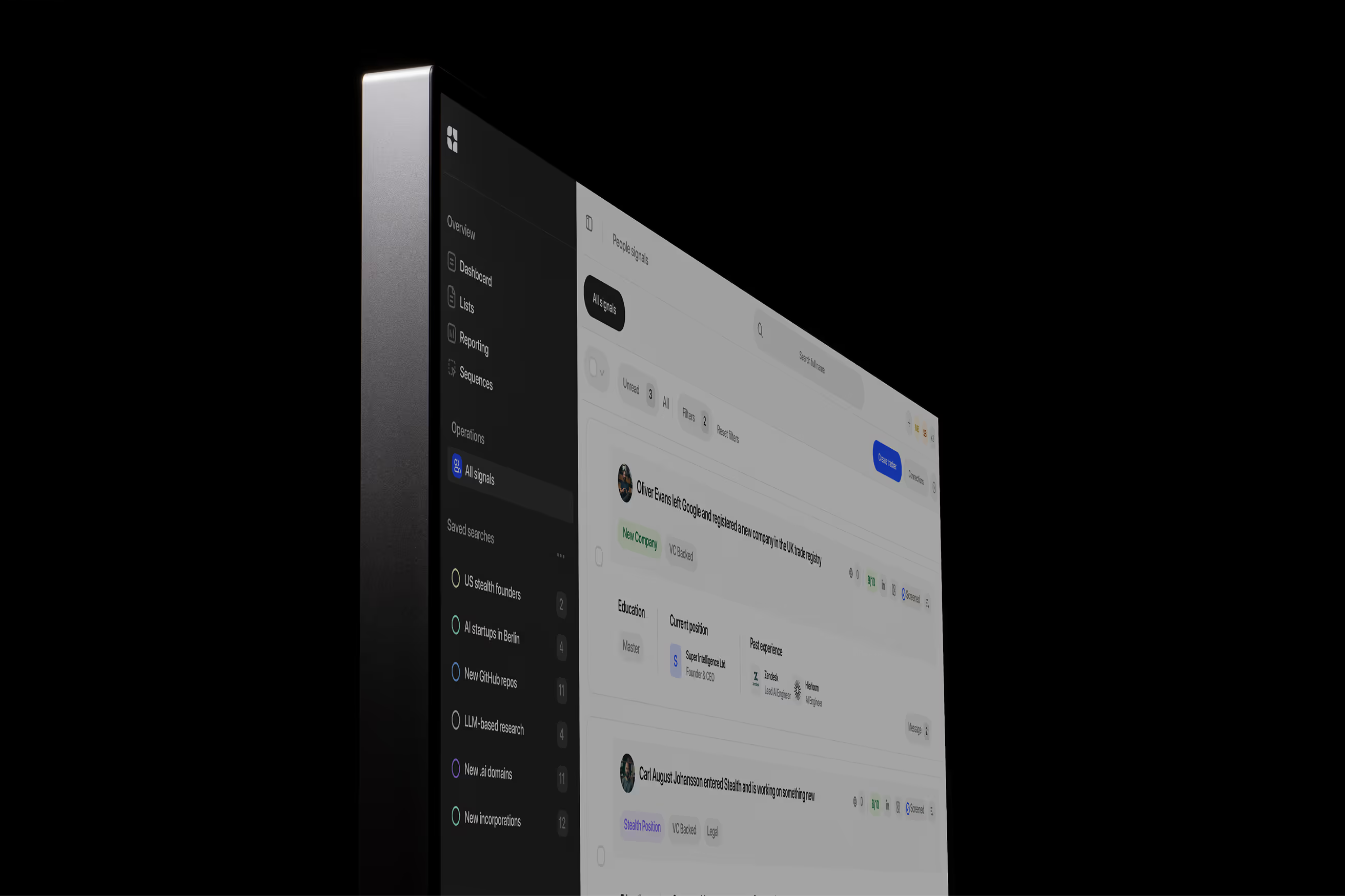
Evertrace combines formal founding signals from company registries, GitHub, patent databases, and domain registrations with other signals from social platforms globally. This combination produces earlier and higher-confidence detections than formal founding signals alone. When a talent signal from an individual with a strong background is corroborated by a company registration or domain registration within a short window, that combined signal is surfaced as a high-priority detection.
Book a demo to see Evertrace in action
Frequently Asked Questions
What is talent tracking in venture capital?
Talent tracking is the practice of monitoring individuals likely to start high-potential companies, in order to identify founding intent before any company formation event occurs. It operates at the stage before formal founding indicators appear.
What professional movements most strongly suggest founding intent?
Announced departures from senior roles at technology companies, moves from growth-stage companies to ambiguous next steps, exits from research or academic roles with commercially relevant expertise, and active co-founder searches are the strongest individual indicators.
What is the false positive rate in talent tracking?
Higher than for formal founding signals. Many people who leave senior roles do not start companies. Filtering criteria that focus on specific background characteristics, relevant domain expertise, and corroborating behavioral signals reduce false positives, but talent tracking is always best used as a leading indicator to be confirmed by subsequent formal signals.
The founder detection engine for VCs
AI-powered founder detection with unmatched coverage.
 Book a demo