Book a demo
30 minutes
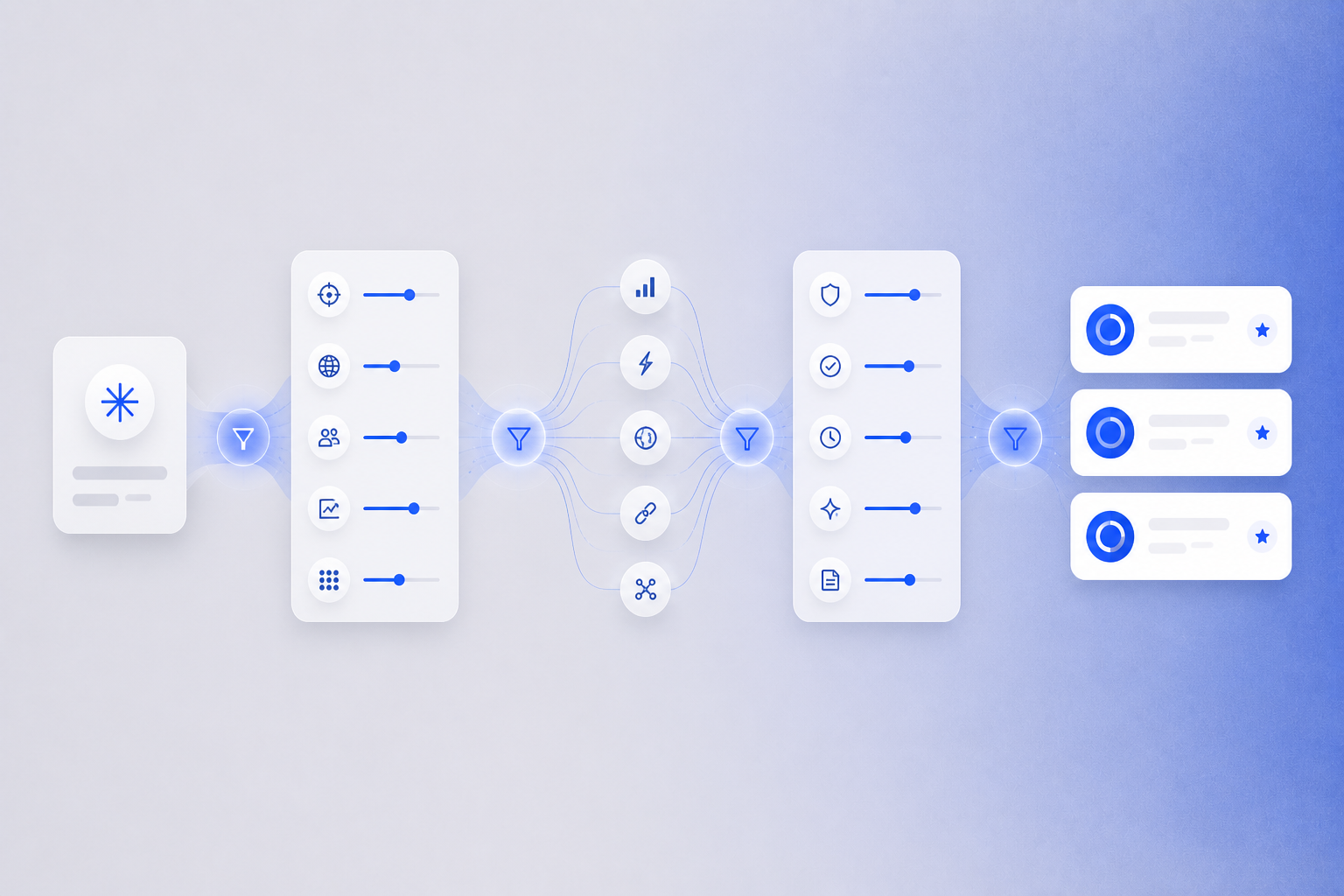
Startup scouting platforms help investors find companies that match their investment thesis. But the category contains several fundamentally different products.
Most funds can tell you how many companies they reviewed last quarter. Far fewer can tell you whether their sourcing process is improving.
An investment thesis is only useful for sourcing when it can be translated into observable criteria.
Early founder outreach fails when it pretends to be personal.
Outbound deal sourcing means identifying and contacting relevant founders before they approach the fund.
Data-driven venture capital is the use of structured information to improve how funds discover, evaluate, and support companies.
Emerging managers face an awkward sourcing problem.
Corporate startup scouting is the process of finding external companies that could become investment targets, technology partners, suppliers, acquisition candidates, or participants in a pilot.
Every European company leaves a legal record when it is incorporated. For early-stage investors, that makes company registries one of the few systematic sources that can reveal a startup before its launch, financing announcement, or appearance in a commercial database.
Stealth mode reduces a company’s public exposure. It does not eliminate evidence that the company is being formed.
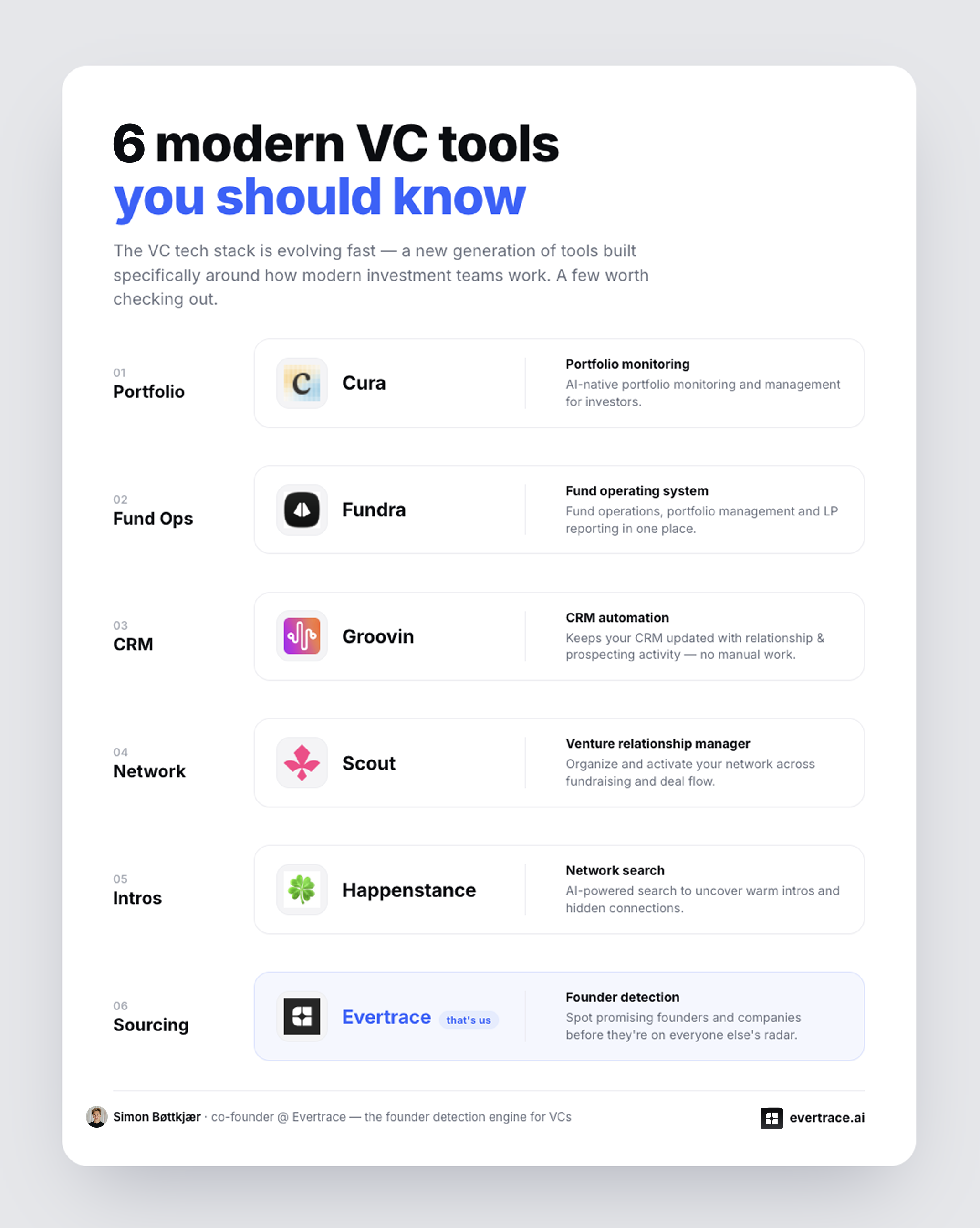
The VC tech stack is being rebuilt around how investment teams actually work. Here are six modern, purpose-built tools, across sourcing, portfolio, fund ops, CRM and network, worth knowing in 2026.
Most early-stage funds spend a surprising amount of time chasing portfolio KPIs and stitching together LP updates. A new generation of portfolio monitoring software has turned that quarterly fire drill into a continuous, queryable system of record. Here's an honest look at the platforms worth evaluating, and why Standard Metrics is the one to start with.
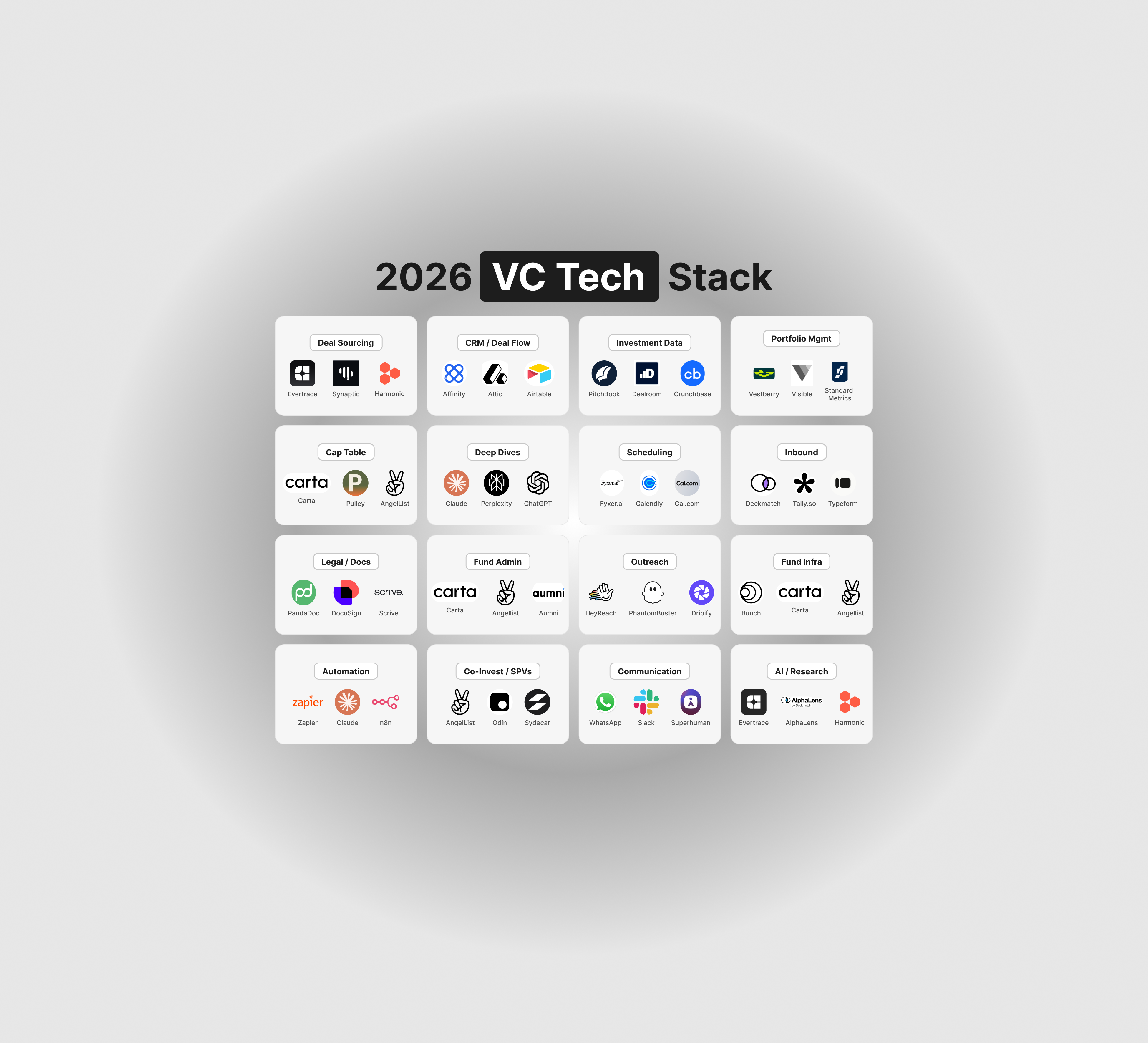
VC firms in 2026 run on a very different stack than just a few years ago. We mapped 48 tools across 16 categories - from AI-native deal sourcing and LLM-powered research to automated portfolio management - that modern venture capital firms rely on daily.
Warm introductions and signal-based sourcing are not competing approaches. They cover different parts of the founding population at different stages. This guide compares both honestly, explains where each falls short, and describes how the best early-stage funds use them together to build a complete sourcing strategy.
MCP (Model Context Protocol) allows AI agents to query founder detection platforms, enrich profiles, draft personalised outreach, and log everything to a CRM in a single workflow. This guide explains how the technology works, what an end-to-end automated outreach workflow looks like, and what it cannot replace.
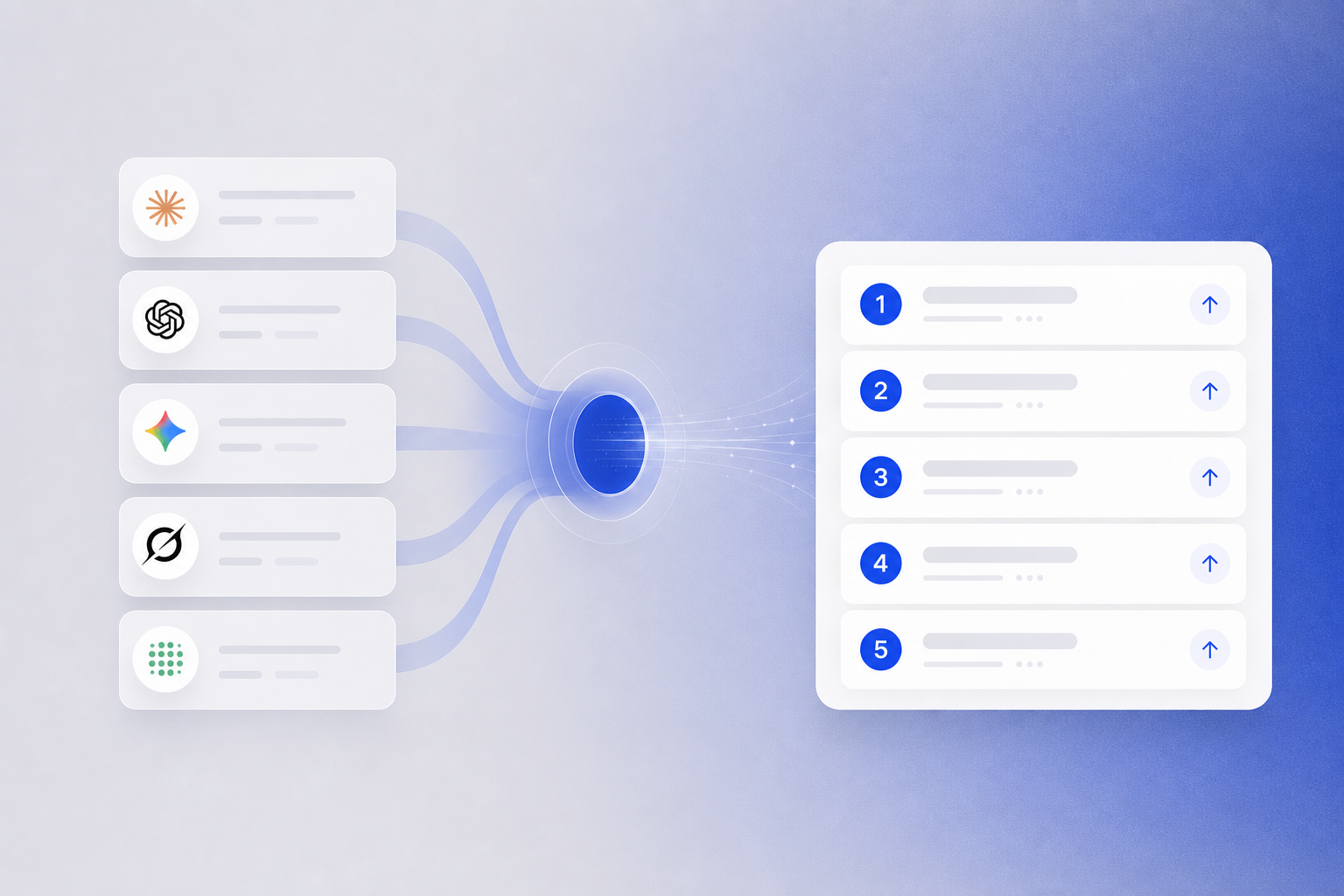
AI is not replacing investor judgment in venture capital. It is changing the infrastructure of how that judgment gets applied. This guide examines where AI is actually making a difference in VC sourcing, where it is not, and how the most effective early-stage funds are integrating it into their workflows.
Deal sourcing is the most consequential activity in venture capital. This guide covers every dimension of VC deal sourcing: the theory, the three tiers of deal flow, the eight sourcing channels, the tools, the workflows, and the compounding advantages that separate funds that treat sourcing as core infrastructure from those that do not.
The market for VC sourcing software has matured significantly. What was once a collection of general-purpose databases and spreadsheets has become a specialised category of tools purpose-built for early-stage investors. This guide covers every major category, what each does well, where it falls short, and how to build the right stack.
The tools available for finding early-stage founders have changed significantly. This guide covers the major categories of VC sourcing tools, what each does well, where each falls short, and how to build the right stack for a pre-seed or seed fund.
European venture capital has matured significantly. The most competitive early-stage funds are building sourcing infrastructure that would have seemed unnecessary five years ago. This guide examines what the best European funds do differently and how the shift toward systematic sourcing looks in practice.
The United Kingdom has the largest startup ecosystem in Europe, world-class research universities, and the most transparent company formation data anywhere. This guide covers how to source UK founders systematically, the key sectors and city clusters, and how Companies House and UK-specific data sources give early-stage investors an edge.
Germany is Europe's largest economy and the second largest source of venture-backed companies. Its ecosystem is engineering-driven, B2B-oriented, and geographically distributed across Berlin, Munich, Hamburg, and the Rhine-Ruhr region. This guide covers the Handelsregister, key sectors, city clusters, and how to find German founders before they raise.
The Nordic countries have produced an outsized concentration of venture-backed technology companies relative to their population. For early-stage investors, the region offers high technical talent density, reasonable early-stage valuations, and a founder population small enough that systematic signal detection can provide genuine coverage advantage.
The angels consistently getting into the best European pre-seed rounds are not the ones with the longest networks. They are the ones who have built systematic ways of finding founders before anyone else knows they exist. This guide covers how to do that as an individual investor.
University spinouts are among the most consistently interesting companies in early-stage venture capital. They are also among the hardest to find at the right stage. This guide explains how spinouts form, what signals appear during the transition from research to venture, and how investors find the best ones early.
Biotech companies take longer to form and longer to develop than any other venture sector. The signals appear earlier, the competitive window is longer, and the return on early relationship-building is exceptional. This guide covers where biotech founders come from, which signals matter, and how to approach researchers before they have decided to commercialise.
AI and ML founders come from a small number of research labs, PhD programmes, and senior ML engineering roles. Competition for the best founders is intense, and the best ones are often not the ones who announce themselves first. This guide covers where AI founders come from, which signals indicate a new AI venture is forming, and how to approach them credibly.
Climate tech founders are disproportionately researchers and engineers whose path to company formation looks different from software founders. This guide explains where the signals appear, which sectors to monitor most closely, and how to build a systematic climate tech sourcing approach.
Managing deal flow at scale is one of the most underestimated operational challenges in venture capital. This guide covers the tools, process structures, and common failure points that separate funds with compounding sourcing advantages from those that plateau.
Time-to-first-contact is the gap between a founding signal appearing and an investor making outreach. As signal volumes grow and more funds monitor founding activity, speed becomes a genuine differentiator. This guide covers where automation helps most, what an effective workflow looks like, and what the risks are.
The most valuable investor conversations happen before any fundraising process begins. This guide covers how to find founders before they are raising, how to approach the first message, what to say, and how to build a relationship that means something by the time they are ready to take capital.
Most VC theses define what to invest in. The best early-stage theses also define when and how to find it. Building a thesis around early detection means making systematic founder discovery a central part of the fund's competitive strategy. This guide explains what that looks like in practice.
A startup watchlist is a structured, actively maintained list of companies and individuals an investor monitors before they become active investment opportunities. This guide explains what a watchlist is for, how to structure it, what to track, and how to turn early detections into investments.
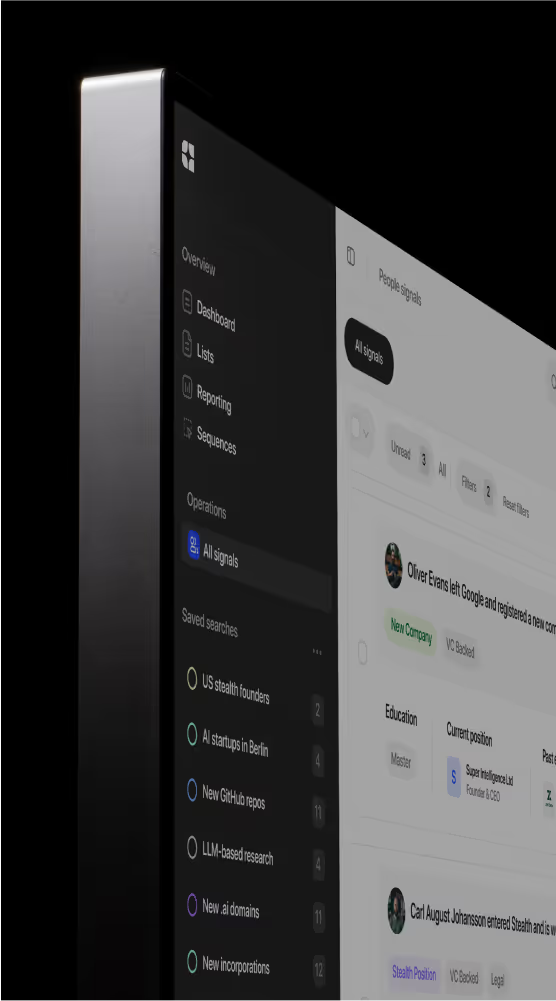
Stealth mode is not total invisibility. Founders going quiet leave observable traces in trade registries, GitHub, domain registrations, co-founder searches, and other transitions. This guide explains how to detect each of these signals and how to act on them before any other investor is aware.
Most VC sourcing advice starts too late. This guide covers how to find founders at the moment of formation, the six signal types that surface companies before any public announcement, and how to build a sourcing workflow that compounds over time.
Most VC funds have sourcing activity, not a sourcing process. This guide explains the four components of a systematic sourcing process, how to build the right data infrastructure, and the habits that turn a good process into a durable competitive advantage.
X is where a specific and important population of potential founders publicly works through ideas, signals professional transitions, and exhibits founding intent before any company formally exists. This guide explains what founding-intent signals look like on X and how to monitor for them systematically.
Product Hunt is one of the most consistently useful public signals for early-stage investors. Every day, new products are launched by founders putting something in front of the world for the first time. This guide explains how to monitor it systematically, what signals to look for, and how to build it into a sourcing process.
Domain registration is one of the most underappreciated early founding signals. It often appears earlier than any other observable trace of a new company, and combines powerfully with other signal types to raise detection confidence. This guide explains what to look for and how to use it.
Government grants identify researchers and engineers working on commercially relevant technologies one to three years before any company formation. This guide covers the key grant databases including SBIR, Innovate UK, Horizon Europe, and national research councils, and explains how to build grant monitoring into a sourcing process.
Deep tech ventures frequently start in research labs, not garages. Academic publications, preprints, and patent filings often appear twelve to thirty-six months before any company formation. This guide explains which research outputs matter, how to monitor them, and how to approach researchers before they have decided to commercialise.
Patent filings are one of the least used and most underrated signals in venture capital. For deep tech, biotech, climate, and hardware investors, they can surface founders months or years before any company announcement. This guide explains how patent signals work and how to integrate them into a sourcing process.
GitHub is where many technical founders begin building before any announcement exists. This guide explains the specific activity patterns that indicate a founder is transitioning from employment to company formation, and how investors use them as a systematic sourcing signal.
Every week, thousands of new companies are incorporated across Europe. A small but significant number are the earliest expressions of what will become venture-backed startups. This guide covers how European trade registries work, which countries have the most useful data, and how investors use them as a real-time sourcing signal.
Pre-seed and seed are among the most commonly misused terms in venture capital. This guide clarifies what each stage means in practice, how the investment dynamics differ, and why the distinction matters most for investors who want to find the best opportunities earliest.
Talent tracking monitors professional movements of individuals likely to start high-potential companies, identifying founding intent before any company formation occurs. This guide explains what movements matter, how it combines with other signals, and how it fits into a broader early-stage sourcing strategy.
Founder scoring ranks early-stage investment signals based on how closely founding individuals match the profiles of previously successful venture-backed founders. This guide explains how scoring models work, what they draw on, and where their limitations lie.
Competitive intelligence in VC is the systematic analysis of other funds, their portfolio activity, and their sourcing approaches, with the goal of identifying thesis positioning opportunities before competition intensifies. This guide explains what it is, where it draws on, and how it informs sourcing strategy.
First-mover advantage in venture capital means being the first to build a substantive relationship with a founder before any other investor knows the company exists. This guide explains what it actually means, how it compounds, and how to build it systematically.
Founder-market fit is the degree to which a founder's background, expertise, and network make them unusually well-suited to build a company in a specific market. At pre-seed, where almost no product or revenue evidence exists, it is the most important dimension of the investment decision.
A venture studio builds companies internally rather than investing in companies that founders bring to it. This guide explains how the model works, how it differs from traditional funds and accelerators, how studios source founding talent, and what the European studio landscape looks like.
A VC scout program extends a fund's sourcing reach by designating founders, operators, and academics to identify early-stage opportunities in exchange for carried interest. This guide explains how scout programs work, what scouts do, how they find deals, and how they compare to signal-based detection.
A stealth startup is a company operating with intentionally limited public visibility. This guide explains what stealth means in practice, why founders choose it, what observable traces stealth companies leave behind, and how investors find them before any announcement.
Startup intelligence is the systematic collection and analysis of data about early-stage companies before they become publicly visible. This guide explains what it is, what data sources it draws on, how it differs from startup databases, and why leading VC funds are building it as core infrastructure.
Proprietary deal flow is widely claimed and rarely achieved. Most network-based sourcing produces well-positioned shared deal flow, not genuinely proprietary flow. This guide defines what proprietary deal flow actually means, why it matters for returns, and how the most effective funds build it systematically.
Deal flow is one of the most frequently used terms in venture capital and one of the least precisely defined. This guide defines it clearly, distinguishes the three types that matter most, and explains how modern early-stage funds are shifting from reactive to systematic deal generation.
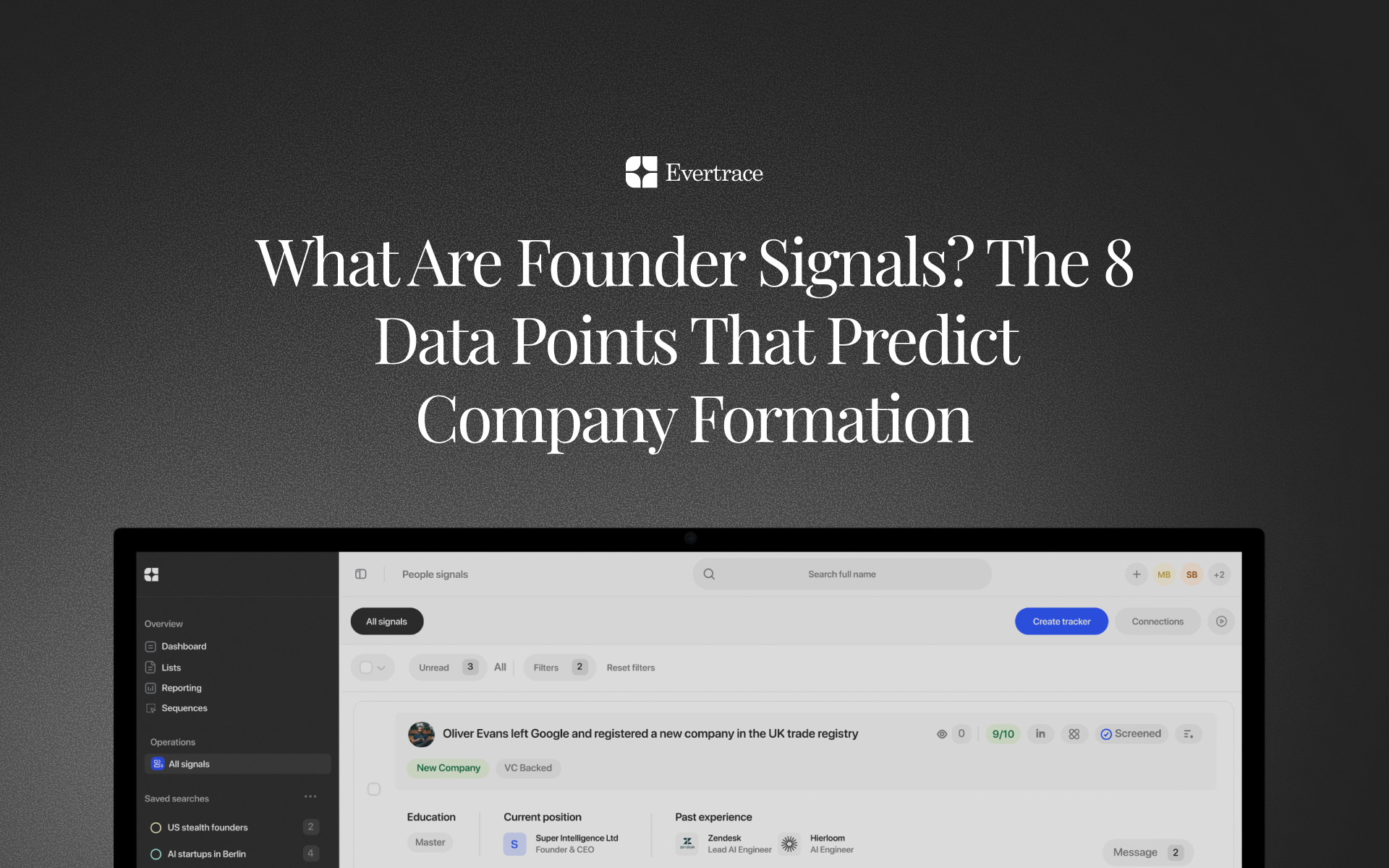
A founder signal is a piece of observable data that indicates a person is in the process of forming a company, before any announcement or fundraise. This guide defines the eight most reliable signal types and explains how investors use them to find founders at the earliest possible stage.
A founder detection engine identifies people forming companies before they go public, using behavioral signals like trade registry filings, GitHub activity, patents, and domain registrations. This guide explains how they work, why timing is the core advantage, and how modern VC firms use them.
Let us show you what early-stage detection looks like in practice.









.png)